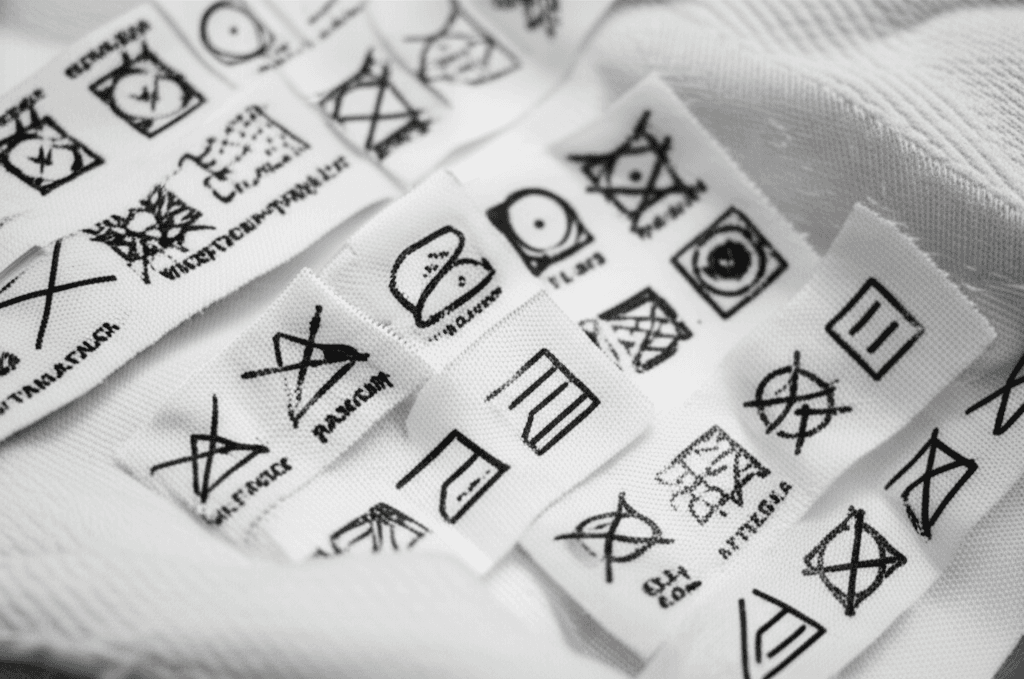
Every garment you own comes with a small tag containing cryptic symbols - the care label. Understanding these symbols is your first line of defence against shrinking, colour bleeding, and fabric damage. Here's your complete guide to decoding what your clothes are trying to tell you.
The Five Basic Symbols
Care labels use five universal symbol categories:
1. Washing (Tub Icon): A tub filled with water indicates washing instructions. Numbers inside show maximum temperature. Dots also indicate temperature (more dots = hotter). A hand in the tub means hand wash only. An X through the tub means do not wash.
2. Bleaching (Triangle): An empty triangle means any bleach is safe. Diagonal lines inside mean non-chlorine bleach only. A crossed-out triangle means no bleach ever.
3. Drying (Square): A circle inside the square represents tumble drying. Dots inside indicate heat level. A crossed-out symbol means do not tumble dry. Lines inside indicate natural drying - horizontal line means dry flat, vertical line means hang dry.
4. Ironing (Iron Icon): Dots inside the iron show temperature (one dot for low, three for high). Steam lines below mean steam is safe. A crossed-out iron means no ironing.
5. Professional Care (Circle): A circle indicates dry cleaning. Letters inside specify which solvents are safe. A crossed-out circle means do not dry clean.
Common Mistakes to Avoid
Ignoring Temperature Limits: Washing at too high a temperature causes shrinking, colour fading, and fabric damage. When in doubt, go cooler.
Over-Drying: High heat in the dryer is hard on fabrics. Remove items while slightly damp to reduce wear and make ironing easier.
Using Wrong Bleach: Chlorine bleach on colours or delicate fabrics causes irreversible damage. Always check the triangle symbol first.
Ironing Too Hot: Synthetic fabrics melt at high temperatures. Always start with a cool iron and increase heat only if needed.
Special Fabric Considerations
Silk: Usually requires dry cleaning or careful hand washing in cool water with special silk detergent. Never wring - roll in a towel to remove water.
Wool: Agitation and heat cause felting (shrinking). Hand wash or use wool cycle, and dry flat to prevent stretching.
Cashmere: Treat like wool but with even more care. Professional cleaning is recommended for valuable pieces.
Linen: Can usually tolerate higher temperatures but wrinkles easily. Iron while damp for best results.
Polyester and Synthetics: Generally durable but melt at high temperatures. Keep ironing heat low.
When to Ignore Care Labels
Interestingly, manufacturers often include overly cautious care instructions to limit their liability. A "dry clean only" label sometimes just means "we haven't tested home washing." However, we recommend following labels for expensive or cherished items - the risk isn't worth it.
For items you're unsure about, bring them to Findlay's. We'll assess the fabric and recommend the safest, most effective cleaning method.
A Quick Reference
Keep this simple guide in mind:
- Dots = temperature (more = hotter)
- Lines = drying method (horizontal = flat, vertical = hang)
- X = don't do this
- Circle = dry clean
When in doubt, cooler and gentler is always safer. And remember, our team is always happy to help decode tricky care labels or advise on the best treatment for your garments.
Need Professional Fabric Care?
Our team has over 60 years of experience caring for all types of garments. Get in touch for expert advice or to book our services.